
Got Buckthorn?
We want you to be successful in getting rid of this widespread invasive plant. So let’s get real: You’ll need a good plan and a commitment to long-term maintenance.
Why bother? Effective buckthorn can lead to: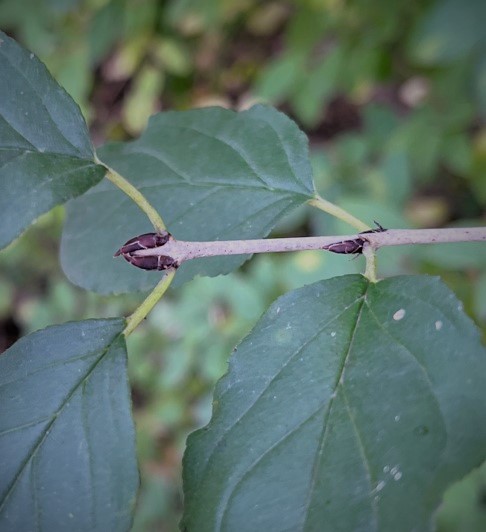
- A tidier, more lovely home landscape
- A more complex food web that supports diverse plants, pollinators and wildlife
- Healthier soils that absorb and hold more water
- Less erosion from slopes into water bodies
- And much more!
Here's the strategy we recommend.
- Learn to identify buckthorn and distinguish it from valuable native species like gray dogwood, nannyberry, serviceberry, choke cherry or American plum.
- Learn best practices to remove buckthorn. You can use any - or all! - of these approaches to learn and practice the most effective strategies and timing for success.
- Explore our online learning module, which describes recommended strategies and timing.
- Attend an in-person workshop
- Watch a recording of the workshop (closed captioning and translation are available)
- Volunteer in city parks to learn skills while meeting great people and making a difference in our community. Buckthorn events typically take place between late August and mid-November, or sometimes in late winter and early spring.
- The city strives to make events and resources as inclusive as possible. Contact Christine at cpetersen@minnetonkamn.gov or 952-988-8442 to discuss options for sign language interpretation, translation or other services.
- Once you have the knowledge, make a plan.
- Know where you need to work. Use an aerial map or other method to mark your buckthorn problem areas, and take it on bit by bit. Removing too much at once can become overwhelming to maintain.
- Select and use the right timing and method, based on where the buckthorn grows, whether you are willing to use herbicide, and other factors.
- Are you removing buckthorn on a slope? You will want to be especially diligent to prevent erosion down the slope, which can pull seed away from where it’s needed or impact water quality. Consider these suggestions:
- Use erosion control blankets when seeding—these weed-free straw mats are a good investment to hold the seed in place as plant germinate and become established. Blankets are available from MNL Corp. (which manages the city’s annual native plant & seed sale) and elsewhere.
- Install erosion control logs at the bottom of the slope to keep soil from eroding into the water until the new vegetation is established.
- Are you removing buckthorn near a wetland, stream or lake?
- Be sure to use an aquatic-approved herbicide (as described in the buckthorn learning module).
- Avoid using any heavy equipment that would disturb the soil (which is quite fragile in wetlands).
- Fell larger buckthorn so it falls away from the wetland (again, to reduce soil disturbance).
- Apply a buckthorn replacement seed mix as soon as possible, and maintain over the long-term as described below, to prevent erosion.
- Properly manage the debris. You can take it to the city's brush drop-off site or look at criteria for our residential buckthorn pick-up service.
- Set and keep goals for maintenance and revegetation of your buckthorn control area(s).
- As soon as possible after removing buckthorn, seed the area with a Buckthorn Replacement seed mix of fast-growing native shortgrasses.
- This seed is available through our online native plant and seed sale. Ask your Resilient Minnetonka staff contact about a discount coupon.
- Over the first two years, monitor your control area regularly to find and cut buckthorn resprouts and other invasive plants or weeds.
- After two years: Cut or mow the area short. Rake out the thatch and leaves. Overseed the area with a seed mix that includes native wildflowers and grasses. These plants form deep roots, which can really fight back invasive species and other weedy growth over the long term. At the same time, they will help improve soil health, control erosion and increase water absorption into the soil.
- Over time, consider planting in some shrubs or trees to replace some of the ecological functions and structure lost when buckthorn spread. Check out this list for best replacement options, and watch for the city’s annual tree sale to help with purchasing.
- Check our buckthorn replacement list for species that perform well in buckthorn control areas.
- Enjoy your more resilient home landscape!
- As soon as possible after removing buckthorn, seed the area with a Buckthorn Replacement seed mix of fast-growing native shortgrasses.
Would technical assistance or funding help you achieve your goals?
You might be eligible for technical assistance through the city or your watershed to help you identify and set goals for action for resilience on your property. Technical assistance can lead to funding options to help you implement your goals. Visit the Resilient Minnetonka orientation module to learn more.
Share Got Buckthorn? on Facebook
Share Got Buckthorn? on X (formerly Twitter)
Share Got Buckthorn? on Linkedin
Email Got Buckthorn? link

Thank you for your contribution!
Help us reach out to more people in the community
Share this with family and friends