Share Big Willow Park Master Planning and Restoration on FacebookShare Big Willow Park Master Planning and Restoration on X (formerly Twitter)Share Big Willow Park Master Planning and Restoration on LinkedinEmail Big Willow Park Master Planning and Restoration link
Big Willow Park is one of the gems in Minnetonka's park system, with an active baseball, soccer, and softball complex and several miles of trails and paths winding along the Minnehaha Creek corridor and through adjacent wooded areas.
The Minnetonka City Council approved the updated Parks, Open Space and Trail (POST) System Plan in 2022. The POST Plan provides a road map for planning park improvements, ensuring that the city’s parks, trails and open spaces continue to serve the needs of the entire community.
A key recommendation from the POST Plan includes creating master plans for all major community parks, including Big Willow Park. Staff is working with a consultant to create a master plan outlining future park improvements to pursue that support restoration that is currently underway.
The sports complex is used by numerous local, long-standing sports organizations as well as a host site for large, regional tournaments.
Restoration efforts in this park focus on removing invasive species and working to increase plant diversity and resilience to changing climate conditions. In addition to restoration, staff - with the support of volunteers and contractors - will conduct long-term maintenance to monitor tree health, identify and manage familiar or new invasive species, and conduct controlled burns as needed to clear debris and promote native plant growth.
Big Willow Park is one of the gems in Minnetonka's park system, with an active baseball, soccer, and softball complex and several miles of trails and paths winding along the Minnehaha Creek corridor and through adjacent wooded areas.
The Minnetonka City Council approved the updated Parks, Open Space and Trail (POST) System Plan in 2022. The POST Plan provides a road map for planning park improvements, ensuring that the city’s parks, trails and open spaces continue to serve the needs of the entire community.
A key recommendation from the POST Plan includes creating master plans for all major community parks, including Big Willow Park. Staff is working with a consultant to create a master plan outlining future park improvements to pursue that support restoration that is currently underway.
The sports complex is used by numerous local, long-standing sports organizations as well as a host site for large, regional tournaments.
Restoration efforts in this park focus on removing invasive species and working to increase plant diversity and resilience to changing climate conditions. In addition to restoration, staff - with the support of volunteers and contractors - will conduct long-term maintenance to monitor tree health, identify and manage familiar or new invasive species, and conduct controlled burns as needed to clear debris and promote native plant growth.
The draft master plan is available for review and comment. Please provide your feedback to help shape the master plan for Big Willow Park!
You need to be signed in to comment in this Guest Book.
You need to be signed in to comment in this Guest Book. Click here to Sign In or Register to get involved
Thank you for posting "Draft 2" of the proposed plans for sections 3 and 4, which was presented at the June 3 Park Board Meeting.
First, I would respectfully request that updated map versions have a graphic scale. In lieu of one in the Draft 2 version, I used as an estimate that a parking stall is 9' x 20'. Therefore, the length of the parking lot (13 stalls) along MTKA Blvd is about 120'. The dog park area has two sections: the "leg" running east/west and the "head" - the curved area. The length of the "leg" is 150'; the width of narrow end is 30'; the width where the "leg" meets the "head" is 60'; the width of the head is 135'; the height of the "head" is 120'. Using these calculations, it's about 1/2 acre total, which was also stated at the June 3 meeting. At the meeting, the small size of the proposed dog park was briefly discussed, noting that it was much smaller than the desired minimum (at least one acre) and constituted a "dog run" rather than a "dog park."
Dog park aromas can waft 150' and up to 500' with a strong breeze. The large reservable shelter to the fence line of the "head" is 120'; from the center of the “head” 150’; to the first small reservable shelter 330'; and to the property of the owner at the end of Burwell Drive 420'. Melding the "natural" activities and aromatic residual from a dog park with folks eating nearby is unpalatable, unpleasant, and unappetizing.
Others have mentioned the proximity of the parking lot to MTKA Blvd and the inherent risks of dogs breaking free. The dog parks I'm familiar with have a sizable setback and buffer to adjacent roads, or they're located in urban areas whereby people walk their dog to the park.
There are three unlabeled red dashes in the narrow area between the two small reservable shelters. Across the creek, going west, there's an unlabeled pink line along the creek that's the same color as the "creek access area." Also, there's a tiny unlabeled pink line going from the "creek access area" to a small island. It would be great to have an update to this page that identifies these items. In the next map version, please include a legend for any unlabeled markings, along with the graphic scale. Presumable, the blue circles are waste containers.
The park’s name is “Big Willow Community Preserve and Athletic Complex.” This proposal drastically diminishes the “preserve” elements of the park. The definition of a community preserve is a “locally protected area or natural space managed by or for the people who live nearby. Unlike traditional state-managed parks, these spaces are defined by community-driven stewardship, where locals, scientists, and civic organizations collaborate to safeguard biodiversity, local traditions, and cultural heritage.
“These localized nature sanctuaries emphasize the connection between human and ecological harmony. Key characteristics of a community preserve include: • Ecological Protection: The primary goal is saving local flora, fauna, and geological features rather than creating highly manicured recreation zones. • Local Governance: The space is usually governed or co-managed by local stakeholders, tribal councils, or a community management committee. • Passive Recreation and Education: They typically support low-impact activities like hiking, birdwatching, and environmental study, rather than high-development sports fields. • Cultural Significance: Many preserves integrate indigenous knowledge and historical heritage, protecting artifacts, ancient landscapes, or traditional community resources.”
In summary, the dog park and reservable shelters are not “passive” activities. Minnehaha Creek is an important migratory route for many birds and wildlife, and use the marsh areas for nesting. At one point, Natural Resources said they wanted to get away from all the mowing in those two parcels and introduce a prairie in that area. With all the big oaks, this still is a great idea. If not a prairie, at least put in “soft landings” around oaks. Combined with the safety issues, wafting odors, inadequate space, proximity to marsh and aquatic life, and degradation of the “preserve,” I would respectfully request the Park Board to consider further exploration of other areas still on the table, including Civic Center Park and Mooney Park, for a dog park and additional non-passive activities.
dlm
3 months ago
The Lake Minnetonka Fan Club Sarah Mann ·
Rising contributor · June 14 at 11:40 AM · Did anyone witness a dog fight on saturday 6/13 at the Carver Dog Park around 12:45pm between a giant breed reddish brown dog (possibly Newfoundland or Tibetan Mastiff) and a 60lb Alaskan husky? I'm hoping I can possibly find the owner of this dog, a heavier set woman w light colored hair who looked to be in her mid 20s. My dog has sustained considerable bite wounds but otherwise seems ok. My parents took my dog to the park while I was at work, so I did not personally witness this event. But according to them, the large dog jumped my husky unprovoked and pinned him to the ground, attacking with serious intent while my dog screamed, pinned by a dog over twice his size and unable to move. Meanwhile, the dog's owner did nothing to intervene or control her dog. My 65 year old handicapped father had to peel this giant dog off by himself (thankfully, no humans were injured.) All she did after the fact was comfort her own dog. No apology, no asking if my dog or my parents were ok. She failed to even restrain her dog after the fact, allowing him to approach again as my parents were trying to get through the gate to leave (my 75 year old mom had to chase him off.) Needless to say, this event was disturbing and has caused a lot of distress for my family. Also, if anyone has advice on how or to whom I could report this, even if we can't track down the dogs owner, it would be appreciated. Guy Super I am sorry this happened. I quit visiting dog parks years ago due to the insane amount of reckless(stupid) dog handlers and aggressive untrained dogs. Looks like a pretty deep bite sorry for your furry buddy. The stress from the interaction is worse than the bite so if you can get your dog around some balanced dogs sooner rather than later that’s the best thing you can do. Stay away from dog parks. I have 2 large Shepherds that can handle themselves and I won’t go anywhere near them. 6d Reply Gigi Jabbour My Great Dane was attacked and bit by a husky there. Owner's didn't take any responsibility either. That was the last time we ever went to a dog park. It was a horrible experience. So sorry that happened to you and your pup
Creek man
3 months ago
I’m opposed to the dog park for all the reasons mentioned by other parties. Knowing where the current kayak launches makes more sites unnecessary. Living along Minnetonka Blvd and across from Big Willow parking lot, I’m already very concerned about safety of people crossing the street and cars turning. There are no turn lanes. Also, emergency vehicles use this road often. But to improve the safety of the road requires Hennepin County to evaluate . To date there have not been accidents, except one person going off the road and into the marsh when attempting to pass a turning car.
Mka
3 months ago
I am concerned about the additional kayak/canoe launch. The preposed sight in area 4 has many steep grades and will have to be substantially torn up and use extra land to do so and wasting a lot of money for a area that is already served by other canoe launch areas. Why not fix the old canoe launch that already exists in area 3 ? It would be substantially less construction to fix this spot in area 3 and is a much better spot for level launching and would save a lot of money to be used elsewhere in the park.
The off leash dog park would be better served on the northwest corner of Plymouth road and the railroad tracks. I have visited this area many times and there is plenty of room and it already has a curb cut and an existing old road off of Plymouth road to get to it and is farther from Minnehaha creek then the other proposed sites. and the barking noise would affect less residents. As far as I know the noise from the dogs won`t bother the trains. Thanks for listening.
Creek man
3 months ago
I am commenting on the updated Area 3 and 4 of the Big Willow Master Plan and Restoration (??)
I will start with the PROPOSED KAYAK LAUNCH area at the intersection of Minnetonka Blvd and Shady Oak road, a new merger (previously called Mills Landing) with Big Willow Park.
I drove to the currently available kayak/canoe launches in Minnetonka (as per the Minnehaha Creek Watershed District website showing most landings). There are 6 of them within the city of Minnetonka.
The proposed location is one block away from Mills Gazebo Park (easterly) with parking on Bridge Street (Bridge street and Minnetonka Blvd) which is not listed on the MCWD website, and another 1/2 block away from Burwell House, which lists parking and picnic areas.
Less than a mile further west is Civic Center Park which lists, parking, restrooms and picnic areas as well as the canoe/kayak launch.
Less than a mile to the east of the proposed location is Big Willow Park, where there is parking and an asphalt paved path to the creek (I walked it).
The obvious question is: Do we need to spend the money on this proposed new kayak landing when there are 4 others (Big Willow Park, Civic Center Park, Burwell Park, Mills Gazebo park) WITHIN ABOUT 2 MILES? (Note: not including Civic Center Park, there are 3 others within less than 1 mile!)
It’s not just taking out many trees and creating a long diagonal (paved?) trail to the creek (due to steep incline), there are new parking spaces to be created, and restroom facilities.
I submit that Minnetonka currently has more than enough areas to launch canoes and kayaks without cutting out even more trees and spending even more money.
I will now comment on the PROPOSED NEWLY LOCATED 1/2 ACRE DOG PARK and the EXTENDED TRAIL.
The City of Minnetonka’s own Off-Leash Dog Community Workgroup developed a draft including a set of criteria for the siting of dog parks across the park system. The newly proposed location of this Big Willow dog park falls short of most of those criteria — it sits adjacent to a water body (indeed wetlands), a busy road, and residential areas.
In the section labeled: IMPORTANCE OF NATURAL RESOURCES PROTECTIONS, it states “Enjoyment of our natural places is of high importance to community members. All land uses should be implemented with the goal of reducing impact and mitigate damage to soils, plant communities, wildlife, waterbodies and wetlands as much as possible while provided outdoor experiences to a variety of park users.”
In their PLANNING RECOMMENDATIONS/LOCATION: “Distance from residential properties - a set-back from residential properties should always be considered to limit noise, parking concentration, and other impacts”
There is no scale of measurement on this new map, but Matt Kumka, Park and Trail Project Manager told me to use the 20’ parking lot stall as a rough reference point of scale - in doing so THE PROPOSED DOG PARK IS LESS THAN 300’ AWAY from the nearest neighbors! Sight lines, sounds, fecal run off….YIKES!
This proposal places the dog park in an area slated as high priority for restoration and breaks up a contiguous natural area along the creek corridor.
There are 2 small and one large reservable shelters introduced here, as well as a year round toilet. The dog park and these 3 reservable shelters are all SHARING THE SAME 13 PARKING SPOTS.
THIS AREA of Big Willow Park where the proposed (unnecessary) kayak launch/dog park/3 reservable shelters/2 bathrooms is so small, it cannot support what is proposed here.
The ecological damage in the clearing and construction, compression of APEX tree roots (it’s a real thing- foresters and Arborists know this), amount of trees to be removed, the water that will be affected (the creek, plus a pond, and a wetland), the fencing, and, DON’T FORGET THE PROPOSED TRAILS SNAKING ALONG THE SOUTH SIDE OF THE CREEK all the way to Shady Oak Road, are too much for this tiny concentrated animal corridor.
The amount of trees to take out just to put in a trail wide enough to plow in the winter, and also clearance of any trees that would be hanging over the trails now reduces the skinny strip of land between the creek and Minnetonka Blvd (generally paralleling Burwell Drive) to barely a visual barrier of Minnetonka Blvd. in the summer/fall. Definitely not in late fall, winter, early spring! Eventually more would die off due to the root compression (takes approximately 3-5 years, depending on species of tree).
This proposed trail is well within 150’ of Burwell Drive residential property lines. Is that best practices?
Big Willow Park’s 101 acres makes it the smallest of the city’s 5 “community parks”. We do not need to shoehorn everything into it!
The recommendations in this plan are in direct conflict with many of the recommendations and priorities cited in earlier foundational park plans: POST, NRMP, and park-specific master plans and restoration plans.
For example, p.10 of the POST plan details park classifications and descriptions to guide appropriate uses and siting of amenities.
Big Willow is uniquely classified as both a preserve and an athletic complex. The PRESERVE part is the area we are talking about here. A preserve is "Park land maintained as habitat, open space, and visual aesthetics/buffering. Also provides passive use opportunities (i.e., trails, overlooks, interpretive programs, nature-play areas, etc.)."
During the last Park and Rec board meeting (I was present and spoke) Matt Kumka mentioned that “this is not an ideal location for a dog park”.
This proposal seems to conflict directly with Minnetonka’s own 2022 Parks System Plan, which calls for preserving and protecting natural resources, improving habitat quality, and managing the community forest - on both public and private land.
I encourage the board to revisit that mission statement alongside this proposal. Thank you.
deannabrandt
3 months ago
In my comments ahead of the initial master plan presentation in May, I spoke about my family’s love for the abundant nature in Big Willow Park and my concern that adding a dog park would lead to water quality issues and wildlife disruption.
While I think the new proposed site for the off-leash dog park set further back from Minnehaha Creek poses potentially less wastewater run-off issues, I maintain that it is still not the right fit for this incredible natural resource in our community. Big Willow Park was designated a high-priority restoration area in the city’s 2021 Natural Resources Management Plan. The new proposed site for the dog park is in areas labeled oak savanna and oak woodland, some of the most prized plant communities targeted for restoration. This does not seem like a good fit for frequent trampling by paws and feet.
I also continue to be concerned about the impact on park wildlife. While I appreciate the city’s attempt to cut down on the number of off-leash dogs in Big Willow with the addition of signs at park entrance points this spring, in my experience, it has done little to dissuade people from letting their dogs off leash. With recent warm weather, I’ve seen dogs splashing in the creek, often chasing away ducks and geese, nearly every day. I fear adding a fenced off-leash dog park will actually increase the number of dogs off-leash in other areas of Big Willow as patrons bring their dogs to cool down in the creek or to mellow out in quiet corners of the park after play sessions.
As the smallest of Minnetonka’s community parks, I just don’t think Big Willow has the capacity to fit every amenity and trying to add another use will be in direct conflict with the first guiding principle of this master plan document, which is to “preserve, protect and restore natural resources by supporting environmental stewardship and conservation, while building long-term sustainability of the park.”
With this being the first potential fenced dog park in Minnetonka, I also think more information is needed about how the city will run a fenced dog park before one can be included in a park master plan. What will the hours be? How will they be enforced? Will there be lighting for the parking lot or dog park? How will noise complaints be handled? Will off-leash permits be required?
Finally, I also hope that communication during this planning process will be improved. I subscribed to project updates on the Minnetonka Matters website, however, received no notifications when the updated concept plans were placed on the Park Board agenda last week or added to the Minnetonka Matters website just a couple days ahead of the June 3 Park Board meeting. I hope that the final draft master plan will be publicized better and with more advance notice ahead of the next Park Board meeting so that constituents have ample time to digest the plan and provide feedback.
KatieE
4 months ago
June 3, 2026 In regards to the new proposals for Big Willow, it is not right that the community has had only 1 day to read and respond if they have even heard about the new Plan changes, this thwarts community involvement, and is the opposite of transparent and open. Although the added trails and shelters are a plus for Minnetonka residents, it may not be as good for the wildlife we want to preserve in the area, I wonder how that evaluated? I do not see any proposed research or survey, will an ecological impact report be done? It looks like the proposed dog park has grown to a half acre to inflict more ecological stress to the preserve area, it is still located in the wildlife corridor for nesting and migration of all sorts of animals. The plan also does not address run off of urine and feces into wetland and then the creek. I am also concerned the barking will be disturbing not only to wildlife but neighbors, this will be the only fenced dog park in Minnetonka, and perhaps Hopkins, it will be busy all day long, and could be quite an intrusion of constant noise. The redesigned kayak launch may still be too steep and slippery for some to safely and easily use, a heavier canoe could be difficult. This adds yet another place to disrupt wild life, as I took a look around the area I see there is a muskrat warren near by, if the constructed areas were kept closer together maybe human disturbance could be isolated to fewer spots. There is a launch at the St. David's' gazebo perhaps efforts to make it more accessible and some mitigation of the brief rapids area at Bridge Street would remove the need for more building and development. If it does proceed there would need to be attention paid to avoiding erosion on such an incline as people do not stick to paved areas, and paved areas have their own challenges for erosion. As it is now the parking lot drains directly int the creek through an added rock drain, not into the dry pond adjacent to the Parks' grassy area, the city made this dry pond to help filter runoff from the gas station. Fixing this could help water quality of Minnehaha Creek. My feeling is that this proposal has too many constructed areas, too spread out, disrupting a Nature Preserve.
mtkaresident42
4 months ago
Keep the Preserve a Preserve I'd like to echo the comments and concerns from others in the guestbook regarding their concerns for the location of the proposed dog park and other amenities in the preserve portion of this park. The commenters reflect the general sentiment captured in the public surveys that Minnetonka residents value their park preserves for their natural beauty and walking trails, and don't want taxpayer dollars spent on filling them up with "desired" amenities. Having followed the development of the POST, NRMP, and park-specific master plans and restoration plans, I have significant concerns that the recommendations in this plan are in direct conflict with many of the recommendations and priorities cited in these earlier foundational park plans.
For example, p. 10 of the POST plan details park classifications and descriptions to guide appropriate uses and siting of amenities. A preserve is "Park land maintained as habitat, open space, and visual aesthetics/buffering. Also provides passive use opportunities (i.e., trails, overlooks, interpretive programs, nature-play areas, etc.)." Why does the plan propose new parking lots and multiple picnic shelters in the preserve? Similarly, at their recent meeting, the park board asked staff to move the proposed dog park, out of a designated special use area in Minnetonka Mills (and very close to homeowner residences), further east into an area that is designated a preserve. The POST plan (p. 129) outlines facility guidelines and states that the class of park that is appropriate for an off-leash dog park is a community park or special use park (not a preserve). The Big Willow Restoration and Maintenance plan (p. 5) details distinct areas within the park mapped as cultural "meaning the use has been developed as people-oriented such as parking, trails, play areas, gazebos, picnic and turf/lawn." The BW Restoration and Maintenance plan does not map any cultural sections in what is mapped as area 4 in the draft park master plan where multiple picnic shelters are proposed.
The area where the park board has asked staff to move the dog park is an area that the approved BW restoration and maintenance plan (p. 9) prioritizes the conversion of the turfgrass to prairie and the expansion habitat restoration efforts. How will these priorities be implemented with the proposed picnic shelters and dog park? I support these council-approved restoration goals and the proposed trails through these restored homestead sites, because they will provide what the other commenters value about this park, nature trails through a preserve. The new trails proposed will provide better connectivity to and in Big Willow park for the 89% of the survey respondents that visit the park to walk the trails. Both the formal trails and footpaths are noted in the maps in this plan. I would like to see the elimination of many of the footpaths in exchange for formalizing some into maintained trails to provide longer trail mileage and connectivity. Many of these footpaths are redundant and unsustainable.
The community dog working group developed a set of criteria for the siting of dog parks across the park system. The dog park proposed by Minnetonka Mills fails to meet most of the criteria as it is sited next to a water body, busy road, and residences. Moving the dog park east into the preserve does not solve any of these issues, it’s still sited near water, next to a busy road, in an area slated as high priority for restoration, and fails to meet other key criteria, let alone makes no sense from a park design standpoint — it breaks up a contiguous natural area along the creek corridor. I wonder what the residents would think who worked on the creek corridor acquisitions and open space referendum in the early 90s? Did they envision a dog park in the middle of this expansive open space along the creek corridor? The last piece of this corridor has finally been incorporated. Let’s keep this grand vision established by these residents.
Please stop filling up our preserves with stuff. We are spending an significant amount of money developing these park master plans but if we don’t follow their priorities and recommendations, we are wasting taxpayer dollars and all the time the community has spent providing feedback for these park plans. My question to the park board for their next meeting is: Does this master plan support and uphold the goals and objectives of the POST, NRMP, and Restoration and Maintenance Plan?
nature_nel
6 months ago
Thank you for providing an avenue for community feedback.
The area of greatest concern is the proposed fenced dog park near Shady Oak Road. As mentioned in other posts, it's not feasible due to proximity to homes, the creek, and a busy roadway.
Big Willow is two distinct parks rolled into one: cultural areas on the east side of the marsh: ballfields, playground, concessions, etc., and a preserve on the west (up to Shady Oak Road) and north (up to Cedar Lake Road) sides of the marsh. The terrain is very hilly combined with lowlands/marshes. Installing cultural activities including a fenced dog park and shelters will greatly disturb the preserve; as a community, we need to preserve our preserves. Overall, it appears there is no location in the preserve area for dog park. Maybe it's possible to find an area on the east side of the marsh.
Yes, there are issues with parking and accessibility to the western and northern sections. The park would benefit from a year-round restroom, ideally near the proposed parking lot at Shady Oak and a portable one near Cedar Lake Road. And it would benefit from an expanded parking lot at Shady Oak. The path that crosses the city's lots to Burwell Dr. has been cited with water issues -- is it possible to have a boardwalk to address those issues? And, yes, it would be nice to have a bridge midway.
The proposed crosswalk from Roy Guilliams Park is problematic due to the proposed steps from the asphalt path to get up Minnetonka Blvd. It doesn't meet ADA requirements; eliminates use by bikers, strollers, etc., and places people uncomfortably close to Minnetonka Blvd. It also requires people to navigate through multiple parkings lots at Roy Guilliams. Most people use the path on the east side of Applewood Pointe and then attempt to a "convenient" crossover point. IF you can solve the accessibility issues on the north side of the BLVD to cross the BLVD, then connect the southside access point between Applewood Pointe and the small Guilliams Park parking lot near the batting cage.
It will be great having additional boardwalks in Area 1 and Area 2 with "vista" benches, and to have increased connections throughout the park. Thank for putting Big Willow into the master planning process and again for the opportunity for feedback.
dlm
7 months ago
I am so grateful to be living on the creek near Big Willow Park. Also grateful that the city of Minnetonka indeed has master plans for their natural resources.
After reviewing the entire Big Willow Park Master Plan, and attending the park board meeting, I do have some concerns.
1). The idea of a dog park in Focus Area 4 is greatly disturbing for several reasons:
a. It seems to be "shoehorned" into the space available. So many trees and greenery will need to be cut down to allow the dog park and parking.
b. Dogs get loose. In that intersection of Shady Oak Road and Minnetonka Blvd, where the dog park is proposed, it could be catastrophic if/when a dog gets out of a car and bolts before being leashed - not just for the dog, but car/human involvement .
c. The effects of urine and feces that close to the creek (addressed in other comments here) are incongruent if indeed "Minnetonka places strong emphasis on protecting and preserving its natural resources" as stated in this Master Plan.
d. This location is indeed within 500' of residential homes.
2). In the Park Board meeting, another resident mentioned perhaps a picnic area there (the location of the proposed dog park).
a. Currently, there is parking and 2 picnic tables. I drive past there an average of 10 times per week all year around. I can honestly say I've never seen anyone utilizing those 2 picnic tables. Occasionally I see one car parked there.
b. Someone mentioned perhaps it would be a place to sit once getting take out food from the nearby restaurants. When the beautiful Mills Gazebo Park is so close (across Bridge Street from the restaurants), with benches, creek views and access, nobody is going to sit at the intersection of Shady Oak Road and Minnetonka Blvd to eat. The noise and exhaust would be deterrents and steep topography is prohibitive to creating creek access.
3.) A long term goal in Focus Area 4 was to put a walking/biking bridge across the creek (there is an existing bridge, literally called Bridge Street about 1/2 block to the west) to connect the proposed dog park to Burwell Drive (dead end residential street) where then one would walk along Burwell Drive to get to Big Willow Access trail.
a. Why spend the considerable money on another bridge so close?
b. The plan shows the bridge and path from the bridge going through wetlands on the Burwell Drive side. Not ideal since wetland protection has been on the City of Minnetonka's radar for sometime now.
I'm looking forward to the reworked plan to see how the Park Board has merged the suggestions from the residents with the stewardship of this beautiful preserve.
deannabrandt
7 months ago
We live right across Minnetonka Boulevard from Big Willow -- we love the woods and are in there enjoying it frequently. My chief concern about the new plan is that, unless I am mistaken, none of the goals are to protect wildlife. Over the years we have seen decline of wildlife -- in particular, birds (which are usually more visible and audible, of course). It's wonderful to have so many goals of the plan directed at people who frequent the park and its many amenities. But a woods without wildlife is just a park for people. Adding an off-leash dog park would only create more disturbances to wildlife. I would hope the plan would also focus on the well-being of the original inhabitants, and keep Big Willow one of the few places of respite for wildlife and humans alike within the city.
Carol Allis
7 months ago
Big Willow Park Master Planning and Restoration Focus Area 4 - Plan Feedback
1. Dog Park – Location, Safety, and Environmental Concerns a. Location and Safety The proposed dog park is undersized relative to comparable facilities in the area and is located immediately adjacent to Minnetonka Boulevard, a high-traffic arterial roadway. This siting creates a foreseeable and elevated safety risk that is inconsistent with generally accepted park design and risk-mitigation practices. Dog park incidents most commonly involve escape at gates or perimeter fencing due to latch failure, human error, digging, jumping, or leash slippage. In this location, there is no meaningful setback or buffer between the dog park and active traffic lanes. Any escape would place a dog directly into vehicular traffic within seconds, creating a high-consequence hazard that cannot be adequately mitigated by standard fencing or double-gate systems alone. In addition, continuous traffic noise and visual stimulation increase canine stress and reactivity, particularly in a small, constrained park. This increases the likelihood of escape behavior and dog-dog conflicts. Dog parks located within interior park areas or buffered by natural space provide greater safety margins and reduced exposure to these risks. b. Environmental Impacts of Dog Use Near Minnehaha Creek The proximity of the proposed dog park to Minnehaha Creek raises significant environmental concerns related to dog use, waste accumulation, and runoff into a sensitive riparian corridor. Dog parks generate concentrated amounts of pet waste, urine, and disturbed soil. Even with posted rules and waste stations, compliance is incomplete in practice. Dog waste contains nutrients (notably nitrogen and phosphorus), bacteria, and pathogens that can be transported via stormwater runoff into adjacent water bodies. In a location immediately adjacent to the creek, this creates a foreseeable risk of degraded water quality, increased bacterial loading, and downstream ecological impacts. In addition, repeated dog traffic can lead to soil compaction, vegetation loss, and erosion, particularly near fencing, gates, and perimeter areas. These conditions increase sediment transport into the creek and undermine shoreline stability. Urine accumulation can further damage vegetation and reduce the effectiveness of natural buffers intended to filter runoff. Best practices for dog park siting typically include substantial setbacks from surface waters, vegetated buffer zones, and grading designed to direct runoff away from waterways. The proposed location does not appear to provide adequate separation or demonstrated stormwater management measures to address these concerns.
2. Compatibility with Adjacent Properties and Existing Conditions The proposed configuration of the “enhanced spaces” — including the parking lot, dog park, bridge landing, and trail network — does not adequately account for the existing residential context, environmental constraints, or property impacts in the surrounding neighborhood. As shown, these uses are concentrated directly adjacent to established homes along Minnehaha Creek and Minnetonka Boulevard. The intensity and proximity of these combined elements introduce foreseeable impacts, including increased noise, activity, traffic, and loss of privacy. Collectively, these changes represent a material shift in land-use character and pose a substantial risk of diminishing both individual property values and overall neighborhood residential quality. The proposal appears to prioritize regional through-use and destination programming without sufficient buffering, setbacks, or mitigation measures to protect adjacent private properties and existing environmental conditions.
3. Trail Alignment and Wetland Impacts The trail connection from the proposed bridge to Burwell Drive appears, based on the plan, to cross or encroach upon a wetland area. This raises significant concerns regarding compliance with applicable city, county, and state wetland protection regulations. Wetland impacts generally require avoidance as the first priority, followed by minimization and mitigation, along with formal review and permitting. The proposal does not clearly demonstrate how wetland disturbance would be avoided or legally addressed. Potential consequences include regulatory delays, increased project costs, long-term maintenance obligations, and permanent impacts to hydrology, habitat, and water quality.
4. Overall Site Programming and Cumulative Impacts The clustering of parking, dog park, bridge access, and multiple trail connections within a limited footprint results in over-programming of the area. This concentration will funnel pedestrian, bicycle, and vehicle traffic directly adjacent to residential properties and environmentally sensitive features, intensifying noise, activity, and maintenance demands. Alternative configurations or locations could achieve recreational and connectivity objectives while reducing safety risks, environmental impacts, and incompatibility with the surrounding neighborhood.
Conclusion As currently proposed, the area plan raises substantial concerns related to public safety, environmental compliance, neighborhood compatibility, and property impacts. In particular, the siting of a dog park adjacent to both a high-traffic roadway and Minnehaha Creek introduces avoidable safety and environmental risks. A revised approach that reduces program intensity near residences, avoids wetland and riparian encroachment, and provides appropriate setbacks and buffering — especially for the dog park — is necessary to ensure consistency with sound planning principles, environmental protection standards, and long-term community interests.
PeterBrandt
7 months ago
Can the youth baseball field fence lengths be extended to allow for additional ages to use them? Are there any plans to expand the use of any fields to accommodate youth softball?
klf
8 months ago
I’m very lucky to live adjacent to Big Willow Park – it’s a gem and one of the reasons my family bought our home. Since moving next door we’ve all turned into bird watchers calling out sightings of blue herons, bald eagles and barred owls. We’ve spotted furry friends like otter, mink and muskrat, and less-cute creatures like snapping turtles and all manner of toads and frogs that fill the evening air with their songs. My kids now know the difference between invasive plants like buckthorn and garlic mustard and natives like the red dogwood, white meadow anemone flowers and blue vervain that line some of Big Willow’s trails.
It is truly a special place and I’m glad to have the opportunity to provide input on the future of the park through this master planning process. I see the nature preserve area of Big Willow and the athletic complex as two distinct areas. Most of my feedback has to do with the nature preserve. In general, I like the ideas of expanding trails, improving paddle access and adding opportunities for a water play area in the park – all things that my family enjoys at the park and I think should be accessible to all.
But I do have some concerns. I’m particularly concerned with the location of the proposed off-leash dog park and its potential impact on Minnehaha Creek, which I think is the heart of Big Willow Park and draws so much of the wildlife we love to see. The first guiding principle of this planning document is to “preserve, protect and restore natural resources by supporting environmental stewardship and conservation, while building long-term sustainability of the park.” I don’t believe placing a dog park directly adjacent to the creek achieves that goal, and is in direct conflict with other parts of the plan such as adding a water play area downstream.
According to the Minnesota Pollution Control Agency, pet waste washed into natural bodies of water depletes oxygen levels and releases ammonia, which can be harmful to fish and other aquatic organisms. It also contains nutrients that foster weed and algae growth, and is a major source of E.coli, which makes people sick.. A U.S. Environmental Protection Agency study estimated that just 2-3 days’ worth waste from 100 dogs could contribute enough bacteria to temporarily close a watershed area to swimming within 25 miles.
Beyond water quality issues, I have concerns about noise from a dog park disrupting the nature enjoyed around the creek. I think if a dog park must be located in Big Willow, it would be better suited to the athletic complex area of the park adjacent to the public works facility. It is already full of other manmade recreational uses and is further from the creek. But before the city builds a dog park, I think there should be more discussion on policy related to dog parks. A draft policy considered by the council last spring but not adopted states “all land uses should be implemented with the goal of reducing impact and mitigate damage to soils, plant communities, wildlife, waterbodies and wetlands as much as possible while provided outdoor experiences to a variety of park users” and also also that watershed management organizations should be consulted for guidance on water impact concerns. I would like to know if these directions were considered when locating the dog park in this Big Willow Master Plan.
KatieE
8 months ago
Thank you for putting together the draft for the Big Willow Master Plan and the ability to provide feedback. I am providing feedback as a resident who has enjoyed walking at Big Willow for many years. I appreciate being able to walk and enjoy the natural beauty of the oak savanna along Minnehaha Creek. I am grateful that the plan shows special attention to the 43% of respondents who suggested additional trails and connections. I am most excited about the increased connectivity through the use of boardwalks. The parking lot, attached to the far end of the recreational ball fields, would likely be used more during weekdays as an access point for the Preserve if better connected. I also like the idea of creating an access point with parking, signage, and restrooms on the far left side where the new acquired property will attach to the preserve. The park does not need, however, to have four distinct access points with parking lots and restrooms. That will increase cost, maintenance, hardscape and reduce the natural area aesthetic. I would suggest eliminating the central parking lot as that seems redundant. I like the idea of thinking about Big Willow and its environs as a corridor along Minnehaha Creek, not as a park that has to accomplish all in its footprint. Along this corridor, the Burwell House and the Gazebo Park both have rudimentary canoe landings. I think these areas might work better for a canoe/kayak landings since they have closer access to local businesses and shorter portages to vehicles. Otherwise, the typical take out location for canoes is near Hopkins Crossroad. This is also true regarding the picnic shelters. I think Burwell and the Gazebo area could house a reservable picnic shelter, so that the Big Willow Preserve might need, at a maximum, only one picnic shelter. In regards to better access to the creek, the revetment idea was installed in Purgatory Park along the creek and failed due to erosion. I would assume this would be carefully sited? The north side of the creek across from the old dock (the section that had the old rope swing) has a more sand and gravel substrate and could be more conducive to water access. I do have a question about the seasonal difficulty of crossing under the railroad tracks due to flooding . There are multiple bridges proposed in the park, but I am not sure if there is any discussion with the railroad for a potential bridge over the tracks? This might be outside the scope of this project but maybe a discussion could be included in the plan. Thank you for listening. Addendum*** After listening to the park board meeting, I would like to add a comment in regards to the decision to switch the dog park from the far left to the middle of the southern section of the park. I find this to be in direct conflict to the desire for more public water access and trail connections. Installing a dog park in the middle will reduce connectivity and is not in line with the public sentiment. Only 21% wanted a fenced in dog park, whereas 43% desired more connections and trails. The public comments all wanted to keep the preserve less developed. I think the park board is not in tune with public sentiment.

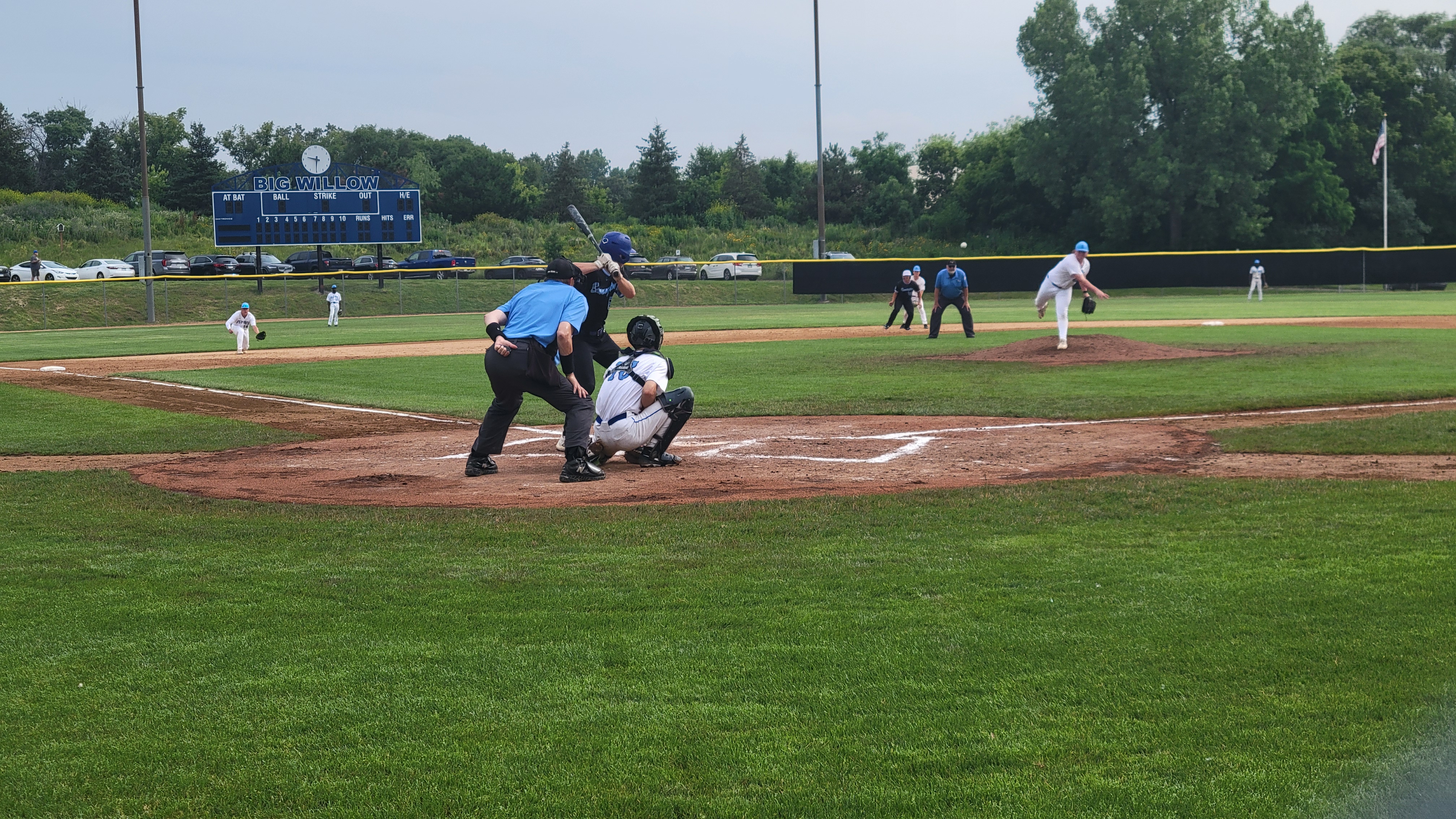 Big Willow Park is one of the gems in Minnetonka's park system, with an active baseball, soccer, and softball complex and several miles of trails and paths winding along the Minnehaha Creek corridor and through adjacent wooded areas.
 A key recommendation from the POST Plan includes creating master plans for all major community parks, including Big Willow Park. Staff is working with a consultant to create a master plan outlining future park improvements to pursue that support restoration that is currently underway.



Thank you for posting "Draft 2" of the proposed plans for sections 3 and 4, which was presented at the June 3 Park Board Meeting.
First, I would respectfully request that updated map versions have a graphic scale. In lieu of one in the Draft 2 version, I used as an estimate that a parking stall is 9' x 20'. Therefore, the length of the parking lot (13 stalls) along MTKA Blvd is about 120'. The dog park area has two sections: the "leg" running east/west and the "head" - the curved area. The length of the "leg" is 150'; the width of narrow end is 30'; the width where the "leg" meets the "head" is 60'; the width of the head is 135'; the height of the "head" is 120'. Using these calculations, it's about 1/2 acre total, which was also stated at the June 3 meeting. At the meeting, the small size of the proposed dog park was briefly discussed, noting that it was much smaller than the desired minimum (at least one acre) and constituted a "dog run" rather than a "dog park."
Dog park aromas can waft 150' and up to 500' with a strong breeze. The large reservable shelter to the fence line of the "head" is 120'; from the center of the “head” 150’; to the first small reservable shelter 330'; and to the property of the owner at the end of Burwell Drive 420'. Melding the "natural" activities and aromatic residual from a dog park with folks eating nearby is unpalatable, unpleasant, and unappetizing.
Others have mentioned the proximity of the parking lot to MTKA Blvd and the inherent risks of dogs breaking free. The dog parks I'm familiar with have a sizable setback and buffer to adjacent roads, or they're located in urban areas whereby people walk their dog to the park.
There are three unlabeled red dashes in the narrow area between the two small reservable shelters. Across the creek, going west, there's an unlabeled pink line along the creek that's the same color as the "creek access area." Also, there's a tiny unlabeled pink line going from the "creek access area" to a small island. It would be great to have an update to this page that identifies these items. In the next map version, please include a legend for any unlabeled markings, along with the graphic scale. Presumable, the blue circles are waste containers.
The park’s name is “Big Willow Community Preserve and Athletic Complex.” This proposal drastically diminishes the “preserve” elements of the park. The definition of a community preserve is a “locally protected area or natural space managed by or for the people who live nearby. Unlike traditional state-managed parks, these spaces are defined by community-driven stewardship, where locals, scientists, and civic organizations collaborate to safeguard biodiversity, local traditions, and cultural heritage.
“These localized nature sanctuaries emphasize the connection between human and ecological harmony. Key characteristics of a community preserve include:
• Ecological Protection: The primary goal is saving local flora, fauna, and geological features rather than creating highly manicured recreation zones.
• Local Governance: The space is usually governed or co-managed by local stakeholders, tribal councils, or a community management committee.
• Passive Recreation and Education: They typically support low-impact activities like hiking, birdwatching, and environmental study, rather than high-development sports fields.
• Cultural Significance: Many preserves integrate indigenous knowledge and historical heritage, protecting artifacts, ancient landscapes, or traditional community resources.”
In summary, the dog park and reservable shelters are not “passive” activities. Minnehaha Creek is an important migratory route for many birds and wildlife, and use the marsh areas for nesting. At one point, Natural Resources said they wanted to get away from all the mowing in those two parcels and introduce a prairie in that area. With all the big oaks, this still is a great idea. If not a prairie, at least put in “soft landings” around oaks. Combined with the safety issues, wafting odors, inadequate space, proximity to marsh and aquatic life, and degradation of the “preserve,” I would respectfully request the Park Board to consider further exploration of other areas still on the table, including Civic Center Park and Mooney Park, for a dog park and additional non-passive activities.
The Lake Minnetonka Fan Club
Sarah Mann
·
Rising contributor
·
June 14 at 11:40 AM
·
Did anyone witness a dog fight on saturday 6/13 at the Carver Dog Park around 12:45pm between a giant breed reddish brown dog (possibly Newfoundland or Tibetan Mastiff) and a 60lb Alaskan husky? I'm hoping I can possibly find the owner of this dog, a heavier set woman w light colored hair who looked to be in her mid 20s. My dog has sustained considerable bite wounds but otherwise seems ok.
My parents took my dog to the park while I was at work, so I did not personally witness this event. But according to them, the large dog jumped my husky unprovoked and pinned him to the ground, attacking with serious intent while my dog screamed, pinned by a dog over twice his size and unable to move. Meanwhile, the dog's owner did nothing to intervene or control her dog. My 65 year old handicapped father had to peel this giant dog off by himself (thankfully, no humans were injured.) All she did after the fact was comfort her own dog. No apology, no asking if my dog or my parents were ok. She failed to even restrain her dog after the fact, allowing him to approach again as my parents were trying to get through the gate to leave (my 75 year old mom had to chase him off.) Needless to say, this event was disturbing and has caused a lot of distress for my family.
Also, if anyone has advice on how or to whom I could report this, even if we can't track down the dogs owner, it would be appreciated.
Guy Super
I am sorry this happened. I quit visiting dog parks years ago due to the insane amount of reckless(stupid) dog handlers and aggressive untrained dogs. Looks like a pretty deep bite sorry for your furry buddy. The stress from the interaction is worse than the bite so if you can get your dog around some balanced dogs sooner rather than later that’s the best thing you can do. Stay away from dog parks. I have 2 large Shepherds that can handle themselves and I won’t go anywhere near them.
6d
Reply
Gigi Jabbour
My Great Dane was attacked and bit by a husky there. Owner's didn't take any responsibility either. That was the last time we ever went to a dog park. It was a horrible experience.
So sorry that happened to you and your pup
I’m opposed to the dog park for all the reasons mentioned by other parties.
Knowing where the current kayak launches makes more sites unnecessary.
Living along Minnetonka Blvd and across from Big Willow parking lot, I’m already very concerned about safety of people crossing the street and cars turning. There are no turn lanes. Also, emergency vehicles use this road often. But to improve the safety of the road requires Hennepin County to evaluate . To date there have not been accidents, except one person going off the road and into the marsh when attempting to pass a turning car.
I am concerned about the additional kayak/canoe launch. The preposed sight in area 4 has many steep grades and will have to be substantially torn up and use extra land to do so and wasting a lot of money for a area that is already served by other canoe launch areas. Why not fix the old canoe launch that already exists in area 3 ? It would be substantially less construction to fix this spot in area 3 and is a much better spot for level launching and would save a lot of money to be used elsewhere in the park.
The off leash dog park would be better served on the northwest corner of Plymouth road and the railroad tracks. I have visited this area many times and there is plenty of room and it already has a curb cut and an existing old road off of Plymouth road to get to it and is farther from Minnehaha creek then the other proposed sites. and the barking noise would affect less residents. As far as I know the noise from the dogs won`t bother the trains.
Thanks for listening.
I am commenting on the updated Area 3 and 4 of the Big Willow Master Plan and Restoration (??)
I will start with the PROPOSED KAYAK LAUNCH area at the intersection of Minnetonka Blvd and Shady Oak road, a new merger (previously called Mills Landing) with Big Willow Park.
I drove to the currently available kayak/canoe launches in Minnetonka (as per the Minnehaha Creek Watershed District website showing most landings). There are 6 of them within the city of Minnetonka.
The proposed location is one block away from Mills Gazebo Park (easterly) with parking on Bridge Street (Bridge street and Minnetonka Blvd) which is not listed on the MCWD website, and another 1/2 block away from Burwell House, which lists parking and picnic areas.
Less than a mile further west is Civic Center Park which lists, parking, restrooms and picnic areas as well as the canoe/kayak launch.
Less than a mile to the east of the proposed location is Big Willow Park, where there is parking and an asphalt paved path to the creek (I walked it).
The obvious question is: Do we need to spend the money on this proposed new kayak landing when there are 4 others (Big Willow Park, Civic Center Park, Burwell Park, Mills Gazebo park) WITHIN ABOUT 2 MILES? (Note: not including Civic Center Park, there are 3 others within less than 1 mile!)
It’s not just taking out many trees and creating a long diagonal (paved?) trail to the creek (due to steep incline), there are new parking spaces to be created, and restroom facilities.
I submit that Minnetonka currently has more than enough areas to launch canoes and kayaks without cutting out even more trees and spending even more money.
I will now comment on the PROPOSED NEWLY LOCATED 1/2 ACRE DOG PARK and the EXTENDED TRAIL.
The City of Minnetonka’s own Off-Leash Dog Community Workgroup developed a draft including a set of criteria for the siting of dog parks across the park system. The newly proposed location of this Big Willow dog park falls short of most of those criteria — it sits adjacent to a water body (indeed wetlands), a busy road, and residential areas.
In the section labeled: IMPORTANCE OF NATURAL RESOURCES PROTECTIONS, it states “Enjoyment of our natural places is of high importance to community members. All land uses should be implemented with the goal of reducing impact and mitigate damage to soils, plant communities, wildlife, waterbodies and wetlands as much as possible while provided outdoor experiences to a variety of park users.”
In their PLANNING RECOMMENDATIONS/LOCATION:
“Distance from residential properties - a set-back from residential properties should always be considered to limit noise, parking concentration, and other impacts”
There is no scale of measurement on this new map, but Matt Kumka, Park and Trail Project Manager told me to use the 20’ parking lot stall as a rough reference point of scale - in doing so THE PROPOSED DOG PARK IS LESS THAN 300’ AWAY from the nearest neighbors! Sight lines, sounds, fecal run off….YIKES!
This proposal places the dog park in an area slated as high priority for restoration and breaks up a contiguous natural area along the creek corridor.
There are 2 small and one large reservable shelters introduced here, as well as a year round toilet.
The dog park and these 3 reservable shelters are all SHARING THE SAME 13 PARKING SPOTS.
THIS AREA of Big Willow Park where the proposed (unnecessary) kayak launch/dog park/3 reservable shelters/2 bathrooms is so small, it cannot support what is proposed here.
The ecological damage in the clearing and construction, compression of APEX tree roots (it’s a real thing- foresters and Arborists know this), amount of trees to be removed, the water that will be affected (the creek, plus a pond, and a wetland), the fencing, and, DON’T FORGET THE PROPOSED TRAILS SNAKING ALONG THE SOUTH SIDE OF THE CREEK all the way to Shady Oak Road, are too much for this tiny concentrated animal corridor.
The amount of trees to take out just to put in a trail wide enough to plow in the winter, and also clearance of any trees that would be hanging over the trails now reduces the skinny strip of land between the creek and Minnetonka Blvd (generally paralleling Burwell Drive) to barely a visual barrier of Minnetonka Blvd. in the summer/fall. Definitely not in late fall, winter, early spring!
Eventually more would die off due to the root compression (takes approximately 3-5 years, depending on species of tree).
This proposed trail is well within 150’ of Burwell Drive residential property lines. Is that best practices?
Big Willow Park’s 101 acres makes it the smallest of the city’s 5 “community parks”. We do not need to shoehorn everything into it!
The recommendations in this plan are in direct conflict with many of the recommendations and priorities cited in earlier foundational park plans: POST, NRMP, and park-specific master plans and restoration plans.
For example, p.10 of the POST plan details park classifications and descriptions to guide appropriate uses and siting of amenities.
Big Willow is uniquely classified as both a preserve and an athletic
complex. The PRESERVE part is the area we are talking about here. A preserve is "Park land maintained as habitat, open space, and visual aesthetics/buffering. Also provides passive use opportunities (i.e., trails, overlooks, interpretive programs, nature-play areas, etc.)."
During the last Park and Rec board meeting (I was present and spoke) Matt Kumka mentioned that “this is not an ideal location for a dog park”.
This proposal seems to conflict directly with Minnetonka’s own 2022 Parks System Plan, which calls for preserving and protecting natural resources, improving habitat quality, and managing the community forest - on both public and private land.
I encourage the board to revisit that mission statement alongside this proposal. Thank you.
In my comments ahead of the initial master plan presentation in May, I spoke about my family’s love for the abundant nature in Big Willow Park and my concern that adding a dog park would lead to water quality issues and wildlife disruption.
While I think the new proposed site for the off-leash dog park set further back from Minnehaha Creek poses potentially less wastewater run-off issues, I maintain that it is still not the right fit for this incredible natural resource in our community. Big Willow Park was designated a high-priority restoration area in the city’s 2021 Natural Resources Management Plan. The new proposed site for the dog park is in areas labeled oak savanna and oak woodland, some of the most prized plant communities targeted for restoration. This does not seem like a good fit for frequent trampling by paws and feet.
I also continue to be concerned about the impact on park wildlife. While I appreciate the city’s attempt to cut down on the number of off-leash dogs in Big Willow with the addition of signs at park entrance points this spring, in my experience, it has done little to dissuade people from letting their dogs off leash. With recent warm weather, I’ve seen dogs splashing in the creek, often chasing away ducks and geese, nearly every day. I fear adding a fenced off-leash dog park will actually increase the number of dogs off-leash in other areas of Big Willow as patrons bring their dogs to cool down in the creek or to mellow out in quiet corners of the park after play sessions.
As the smallest of Minnetonka’s community parks, I just don’t think Big Willow has the capacity to fit every amenity and trying to add another use will be in direct conflict with the first guiding principle of this master plan document, which is to “preserve, protect and restore natural resources by supporting environmental stewardship and conservation, while building long-term sustainability of the park.”
With this being the first potential fenced dog park in Minnetonka, I also think more information is needed about how the city will run a fenced dog park before one can be included in a park master plan. What will the hours be? How will they be enforced? Will there be lighting for the parking lot or dog park? How will noise complaints be handled? Will off-leash permits be required?
Finally, I also hope that communication during this planning process will be improved. I subscribed to project updates on the Minnetonka Matters website, however, received no notifications when the updated concept plans were placed on the Park Board agenda last week or added to the Minnetonka Matters website just a couple days ahead of the June 3 Park Board meeting. I hope that the final draft master plan will be publicized better and with more advance notice ahead of the next Park Board meeting so that constituents have ample time to digest the plan and provide feedback.
June 3, 2026
In regards to the new proposals for Big Willow, it is not right that the community has had only 1 day to read and respond if they have even heard about the new Plan changes, this thwarts community involvement, and is the opposite of transparent and open. Although the added trails and shelters are a plus for Minnetonka residents, it may not be as good for the wildlife we want to preserve in the area, I wonder how that evaluated? I do not see any proposed research or survey, will an ecological impact report be done? It looks like the proposed dog park has grown to a half acre to inflict more ecological stress to the preserve area, it is still located in the wildlife corridor for nesting and migration of all sorts of animals. The plan also does not address run off of urine and feces into wetland and then the creek. I am also concerned the barking will be disturbing not only to wildlife but neighbors, this will be the only fenced dog park in Minnetonka, and perhaps Hopkins, it will be busy all day long, and could be quite an intrusion of constant noise. The redesigned kayak launch may still be too steep and slippery for some to safely and easily use, a heavier canoe could be difficult. This adds yet another place to disrupt wild life, as I took a look around the area I see there is a muskrat warren near by, if the constructed areas were kept closer together maybe human disturbance could be isolated to fewer spots. There is a launch at the St. David's' gazebo perhaps efforts to make it more accessible and some mitigation of the brief rapids area at Bridge Street would remove the need for more building and development. If it does proceed there would need to be attention paid to avoiding erosion on such an incline as people do not stick to paved areas, and paved areas have their own challenges for erosion. As it is now the parking lot drains directly int the creek through an added rock drain, not into the dry pond adjacent to the Parks' grassy area, the city made this dry pond to help filter runoff from the gas station. Fixing this could help water quality of Minnehaha Creek. My feeling is that this proposal has too many constructed areas, too spread out, disrupting a Nature Preserve.
Keep the Preserve a Preserve
I'd like to echo the comments and concerns from others in the guestbook regarding their concerns for the location of the proposed dog park and other amenities in the preserve portion of this park. The commenters reflect the general sentiment captured in the public surveys that Minnetonka residents value their park preserves for their natural beauty and walking trails, and don't want taxpayer dollars spent on filling them up with "desired" amenities. Having followed the development of the POST, NRMP, and park-specific master plans and restoration plans, I have significant concerns that the recommendations in this plan are in direct conflict with many of the recommendations and priorities cited in these earlier foundational park plans.
For example, p. 10 of the POST plan details park classifications and descriptions to guide appropriate uses and siting of amenities. A preserve is "Park land maintained as habitat, open space, and visual aesthetics/buffering. Also provides passive use opportunities (i.e., trails, overlooks, interpretive programs, nature-play areas, etc.)." Why does the plan propose new parking lots and multiple picnic shelters in the preserve? Similarly, at their recent meeting, the park board asked staff to move the proposed dog park, out of a designated special use area in Minnetonka Mills (and very close to homeowner residences), further east into an area that is designated a preserve. The POST plan (p. 129) outlines facility guidelines and states that the class of park that is appropriate for an off-leash dog park is a community park or special use park (not a preserve). The Big Willow Restoration and Maintenance plan (p. 5) details distinct areas within the park mapped as cultural "meaning the use has been developed as people-oriented such as parking, trails, play areas, gazebos, picnic and turf/lawn." The BW Restoration and Maintenance plan does not map any cultural sections in what is mapped as area 4 in the draft park master plan where multiple picnic shelters are proposed.
The area where the park board has asked staff to move the dog park is an area that the approved BW restoration and maintenance plan (p. 9) prioritizes the conversion of the turfgrass to prairie and the expansion habitat restoration efforts. How will these priorities be implemented with the proposed picnic shelters and dog park? I support these council-approved restoration goals and the proposed trails through these restored homestead sites, because they will provide what the other commenters value about this park, nature trails through a preserve. The new trails proposed will provide better connectivity to and in Big Willow park for the 89% of the survey respondents that visit the park to walk the trails. Both the formal trails and footpaths are noted in the maps in this plan. I would like to see the elimination of many of the footpaths in exchange for formalizing some into maintained trails to provide longer trail mileage and connectivity. Many of these footpaths are redundant and unsustainable.
The community dog working group developed a set of criteria for the siting of dog parks across the park system. The dog park proposed by Minnetonka Mills fails to meet most of the criteria as it is sited next to a water body, busy road, and residences. Moving the dog park east into the preserve does not solve any of these issues, it’s still sited near water, next to a busy road, in an area slated as high priority for restoration, and fails to meet other key criteria, let alone makes no sense from a park design standpoint — it breaks up a contiguous natural area along the creek corridor. I wonder what the residents would think who worked on the creek corridor acquisitions and open space referendum in the early 90s? Did they envision a dog park in the middle of this expansive open space along the creek corridor? The last piece of this corridor has finally been incorporated. Let’s keep this grand vision established by these residents.
Please stop filling up our preserves with stuff. We are spending an significant amount of money developing these park master plans but if we don’t follow their priorities and recommendations, we are wasting taxpayer dollars and all the time the community has spent providing feedback for these park plans. My question to the park board for their next meeting is: Does this master plan support and uphold the goals and objectives of the POST, NRMP, and Restoration and Maintenance Plan?
Thank you for providing an avenue for community feedback.
The area of greatest concern is the proposed fenced dog park near Shady Oak Road. As mentioned in other posts, it's not feasible due to proximity to homes, the creek, and a busy roadway.
Big Willow is two distinct parks rolled into one: cultural areas on the east side of the marsh: ballfields, playground, concessions, etc., and a preserve on the west (up to Shady Oak Road) and north (up to Cedar Lake Road) sides of the marsh. The terrain is very hilly combined with lowlands/marshes. Installing cultural activities including a fenced dog park and shelters will greatly disturb the preserve; as a community, we need to preserve our preserves. Overall, it appears there is no location in the preserve area for dog park. Maybe it's possible to find an area on the east side of the marsh.
Yes, there are issues with parking and accessibility to the western and northern sections. The park would benefit from a year-round restroom, ideally near the proposed parking lot at Shady Oak and a portable one near Cedar Lake Road. And it would benefit from an expanded parking lot at Shady Oak. The path that crosses the city's lots to Burwell Dr. has been cited with water issues -- is it possible to have a boardwalk to address those issues? And, yes, it would be nice to have a bridge midway.
The proposed crosswalk from Roy Guilliams Park is problematic due to the proposed steps from the asphalt path to get up Minnetonka Blvd. It doesn't meet ADA requirements; eliminates use by bikers, strollers, etc., and places people uncomfortably close to Minnetonka Blvd. It also requires people to navigate through multiple parkings lots at Roy Guilliams. Most people use the path on the east side of Applewood Pointe and then attempt to a "convenient" crossover point. IF you can solve the accessibility issues on the north side of the BLVD to cross the BLVD, then connect the southside access point between Applewood Pointe and the small Guilliams Park parking lot near the batting cage.
It will be great having additional boardwalks in Area 1 and Area 2 with "vista" benches, and to have increased connections throughout the park. Thank for putting Big Willow into the master planning process and again for the opportunity for feedback.
I am so grateful to be living on the creek near Big Willow Park. Also grateful that the city of Minnetonka indeed has master plans for their natural resources.
After reviewing the entire Big Willow Park Master Plan, and attending the park board meeting, I do have some concerns.
1). The idea of a dog park in Focus Area 4 is greatly disturbing for several reasons:
a. It seems to be "shoehorned" into the space available. So many trees and greenery will need to be cut down to allow the dog park and parking.
b. Dogs get loose. In that intersection of Shady Oak Road and Minnetonka Blvd, where the dog park is proposed, it could be catastrophic if/when a dog gets out of a car and bolts before being leashed - not just for the dog, but car/human involvement .
c. The effects of urine and feces that close to the creek (addressed in other comments here) are incongruent if indeed "Minnetonka places strong emphasis on protecting and preserving its natural resources" as stated in this Master Plan.
d. This location is indeed within 500' of residential homes.
2). In the Park Board meeting, another resident mentioned perhaps a picnic area there (the location of the proposed dog park).
a. Currently, there is parking and 2 picnic tables. I drive past there an average of 10 times per week all year around. I can honestly say I've never seen anyone utilizing those 2 picnic tables. Occasionally I see one car parked there.
b. Someone mentioned perhaps it would be a place to sit once getting take out food from the nearby restaurants.
When the beautiful Mills Gazebo Park is so close (across Bridge Street from the restaurants), with benches, creek views and access, nobody is going to sit at the intersection of Shady Oak Road and Minnetonka Blvd to eat. The noise and exhaust would be deterrents and steep topography is prohibitive to creating creek access.
3.) A long term goal in Focus Area 4 was to put a walking/biking bridge across the creek (there is an existing bridge, literally called Bridge Street about 1/2 block to the west) to connect the proposed dog park to Burwell Drive (dead end residential street) where then one would walk along Burwell Drive to get to Big Willow Access trail.
a. Why spend the considerable money on another bridge so close?
b. The plan shows the bridge and path from the bridge going through wetlands on the Burwell Drive side. Not ideal since wetland protection has been on the City of Minnetonka's radar for sometime now.
I'm looking forward to the reworked plan to see how the Park Board has merged the suggestions from the residents with the stewardship of this beautiful preserve.
We live right across Minnetonka Boulevard from Big Willow -- we love the woods and are in there enjoying it frequently. My chief concern about the new plan is that, unless I am mistaken, none of the goals are to protect wildlife. Over the years we have seen decline of wildlife -- in particular, birds (which are usually more visible and audible, of course). It's wonderful to have so many goals of the plan directed at people who frequent the park and its many amenities. But a woods without wildlife is just a park for people. Adding an off-leash dog park would only create more disturbances to wildlife. I would hope the plan would also focus on the well-being of the original inhabitants, and keep Big Willow one of the few places of respite for wildlife and humans alike within the city.
Big Willow Park Master Planning and Restoration
Focus Area 4 - Plan Feedback
1. Dog Park – Location, Safety, and Environmental Concerns
a. Location and Safety
The proposed dog park is undersized relative to comparable facilities in the area and is located immediately adjacent to Minnetonka Boulevard, a high-traffic arterial roadway. This siting creates a foreseeable and elevated safety risk that is inconsistent with generally accepted park design and risk-mitigation practices.
Dog park incidents most commonly involve escape at gates or perimeter fencing due to latch failure, human error, digging, jumping, or leash slippage. In this location, there is no meaningful setback or buffer between the dog park and active traffic lanes. Any escape would place a dog directly into vehicular traffic within seconds, creating a high-consequence hazard that cannot be adequately mitigated by standard fencing or double-gate systems alone.
In addition, continuous traffic noise and visual stimulation increase canine stress and reactivity, particularly in a small, constrained park. This increases the likelihood of escape behavior and dog-dog conflicts. Dog parks located within interior park areas or buffered by natural space provide greater safety margins and reduced exposure to these risks.
b. Environmental Impacts of Dog Use Near Minnehaha Creek
The proximity of the proposed dog park to Minnehaha Creek raises significant environmental concerns related to dog use, waste accumulation, and runoff into a sensitive riparian corridor.
Dog parks generate concentrated amounts of pet waste, urine, and disturbed soil. Even with posted rules and waste stations, compliance is incomplete in practice. Dog waste contains nutrients (notably nitrogen and phosphorus), bacteria, and pathogens that can be transported via stormwater runoff into adjacent water bodies. In a location immediately adjacent to the creek, this creates a foreseeable risk of degraded water quality, increased bacterial loading, and downstream ecological impacts.
In addition, repeated dog traffic can lead to soil compaction, vegetation loss, and erosion, particularly near fencing, gates, and perimeter areas. These conditions increase sediment transport into the creek and undermine shoreline stability. Urine accumulation can further damage vegetation and reduce the effectiveness of natural buffers intended to filter runoff.
Best practices for dog park siting typically include substantial setbacks from surface waters, vegetated buffer zones, and grading designed to direct runoff away from waterways. The proposed location does not appear to provide adequate separation or demonstrated stormwater management measures to address these concerns.
2. Compatibility with Adjacent Properties and Existing Conditions
The proposed configuration of the “enhanced spaces” — including the parking lot, dog park, bridge landing, and trail network — does not adequately account for the existing residential context, environmental constraints, or property impacts in the surrounding neighborhood.
As shown, these uses are concentrated directly adjacent to established homes along Minnehaha Creek and Minnetonka Boulevard. The intensity and proximity of these combined elements introduce foreseeable impacts, including increased noise, activity, traffic, and loss of privacy. Collectively, these changes represent a material shift in land-use character and pose a substantial risk of diminishing both individual property values and overall neighborhood residential quality.
The proposal appears to prioritize regional through-use and destination programming without sufficient buffering, setbacks, or mitigation measures to protect adjacent private properties and existing environmental conditions.
3. Trail Alignment and Wetland Impacts
The trail connection from the proposed bridge to Burwell Drive appears, based on the plan, to cross or encroach upon a wetland area. This raises significant concerns regarding compliance with applicable city, county, and state wetland protection regulations.
Wetland impacts generally require avoidance as the first priority, followed by minimization and mitigation, along with formal review and permitting. The proposal does not clearly demonstrate how wetland disturbance would be avoided or legally addressed. Potential consequences include regulatory delays, increased project costs, long-term maintenance obligations, and permanent impacts to hydrology, habitat, and water quality.
4. Overall Site Programming and Cumulative Impacts
The clustering of parking, dog park, bridge access, and multiple trail connections within a limited footprint results in over-programming of the area. This concentration will funnel pedestrian, bicycle, and vehicle traffic directly adjacent to residential properties and environmentally sensitive features, intensifying noise, activity, and maintenance demands.
Alternative configurations or locations could achieve recreational and connectivity objectives while reducing safety risks, environmental impacts, and incompatibility with the surrounding neighborhood.
Conclusion
As currently proposed, the area plan raises substantial concerns related to public safety, environmental compliance, neighborhood compatibility, and property impacts. In particular, the siting of a dog park adjacent to both a high-traffic roadway and Minnehaha Creek introduces avoidable safety and environmental risks.
A revised approach that reduces program intensity near residences, avoids wetland and riparian encroachment, and provides appropriate setbacks and buffering — especially for the dog park — is necessary to ensure consistency with sound planning principles, environmental protection standards, and long-term community interests.
Can the youth baseball field fence lengths be extended to allow for additional ages to use them? Are there any plans to expand the use of any fields to accommodate youth softball?
I’m very lucky to live adjacent to Big Willow Park – it’s a gem and one of the reasons my family bought our home. Since moving next door we’ve all turned into bird watchers calling out sightings of blue herons, bald eagles and barred owls. We’ve spotted furry friends like otter, mink and muskrat, and less-cute creatures like snapping turtles and all manner of toads and frogs that fill the evening air with their songs. My kids now know the difference between invasive plants like buckthorn and garlic mustard and natives like the red dogwood, white meadow anemone flowers and blue vervain that line some of Big Willow’s trails.
It is truly a special place and I’m glad to have the opportunity to provide input on the future of the park through this master planning process. I see the nature preserve area of Big Willow and the athletic complex as two distinct areas. Most of my feedback has to do with the nature preserve. In general, I like the ideas of expanding trails, improving paddle access and adding opportunities for a water play area in the park – all things that my family enjoys at the park and I think should be accessible to all.
But I do have some concerns. I’m particularly concerned with the location of the proposed off-leash dog park and its potential impact on Minnehaha Creek, which I think is the heart of Big Willow Park and draws so much of the wildlife we love to see. The first guiding principle of this planning document is to “preserve, protect and restore natural resources by supporting environmental stewardship and conservation, while building long-term sustainability of the park.” I don’t believe placing a dog park directly adjacent to the creek achieves that goal, and is in direct conflict with other parts of the plan such as adding a water play area downstream.
According to the Minnesota Pollution Control Agency, pet waste washed into natural bodies of water depletes oxygen levels and releases ammonia, which can be harmful to fish and other aquatic organisms. It also contains nutrients that foster weed and algae growth, and is a major source of E.coli, which makes people sick.. A U.S. Environmental Protection Agency study estimated that just 2-3 days’ worth waste from 100 dogs could contribute enough bacteria to temporarily close a watershed area to swimming within 25 miles.
Beyond water quality issues, I have concerns about noise from a dog park disrupting the nature enjoyed around the creek. I think if a dog park must be located in Big Willow, it would be better suited to the athletic complex area of the park adjacent to the public works facility. It is already full of other manmade recreational uses and is further from the creek. But before the city builds a dog park, I think there should be more discussion on policy related to dog parks. A draft policy considered by the council last spring but not adopted states “all land uses should be implemented with the goal of reducing impact and mitigate damage to soils, plant communities, wildlife, waterbodies and wetlands as much as possible while provided outdoor experiences to a variety of park users” and also also that watershed management organizations should be consulted for guidance on water impact concerns. I would like to know if these directions were considered when locating the dog park in this Big Willow Master Plan.
Thank you for putting together the draft for the Big Willow Master Plan and the ability to provide feedback. I am providing feedback as a resident who has enjoyed walking at Big Willow for many years. I appreciate being able to walk and enjoy the natural beauty of the oak savanna along Minnehaha Creek.
I am grateful that the plan shows special attention to the 43% of respondents who suggested additional trails and connections. I am most excited about the increased connectivity through the use of boardwalks. The parking lot, attached to the far end of the recreational ball fields, would likely be used more during weekdays as an access point for the Preserve if better connected. I also like the idea of creating an access point with parking, signage, and restrooms on the far left side where the new acquired property will attach to the preserve.
The park does not need, however, to have four distinct access points with parking lots and restrooms. That will increase cost, maintenance, hardscape and reduce the natural area aesthetic. I would suggest eliminating the central parking lot as that seems redundant.
I like the idea of thinking about Big Willow and its environs as a corridor along Minnehaha Creek, not as a park that has to accomplish all in its footprint. Along this corridor, the Burwell House and the Gazebo Park both have rudimentary canoe landings. I think these areas might work better for a canoe/kayak landings since they have closer access to local businesses and shorter portages to vehicles. Otherwise, the typical take out location for canoes is near Hopkins Crossroad.
This is also true regarding the picnic shelters. I think Burwell and the Gazebo area could house a reservable picnic shelter, so that the Big Willow Preserve might need, at a maximum, only one picnic shelter.
In regards to better access to the creek, the revetment idea was installed in Purgatory Park along the creek and failed due to erosion. I would assume this would be carefully sited? The north side of the creek across from the old dock (the section that had the old rope swing) has a more sand and gravel substrate and could be more conducive to water access.
I do have a question about the seasonal difficulty of crossing under the railroad tracks due to flooding . There are multiple bridges proposed in the park, but I am not sure if there is any discussion with the railroad for a potential bridge over the tracks? This might be outside the scope of this project but maybe a discussion could be included in the plan. Thank you for listening.
Addendum***
After listening to the park board meeting, I would like to add a comment in regards to the decision to switch the dog park from the far left to the middle of the southern section of the park. I find this to be in direct conflict to the desire for more public water access and trail connections. Installing a dog park in the middle will reduce connectivity and is not in line with the public sentiment. Only 21% wanted a fenced in dog park, whereas 43% desired more connections and trails. The public comments all wanted to keep the preserve less developed. I think the park board is not in tune with public sentiment.