
Monarch & Pollinator Awareness
The City of Minnetonka is proud to be a leader among North American cities that educate and empower residents to protect pollinators and their habitat.
To learn more:
- Scroll to the Stories section of this page to read about pollinators and their habitat needs, and find the city's annual proclamation for July's Monarch and Pollinator Awareness Month.
- Explore the City of Minnetonka's profile with the Mayors' Monarch Pledge program.
- Read about our work in the Minnetonka Memo.
- Discover why milkweed is such a crucial part of monarch habitat.
- Learn how you can help pollinators on your property, through the Resilient Minnetonka program.
Here are some ways to celebrate and help pollinators wherever you live, work and play.
EVENTS
Attend our presentation: The Mystery and Majesty of Monarch Butterflies, Thursday, July 16, 6:30-8p.m. at Ridgedale Library (12601 Ridgedale Dr.). Advance registration is not required.
We'll look at the monarch's complex life history, highlight the pressures impacting its survival, and explore how each of us can help create and protect monarch habitat - which, in turn, benefits a wide range of other pollinators and wildlife.
ON YOUR OWN
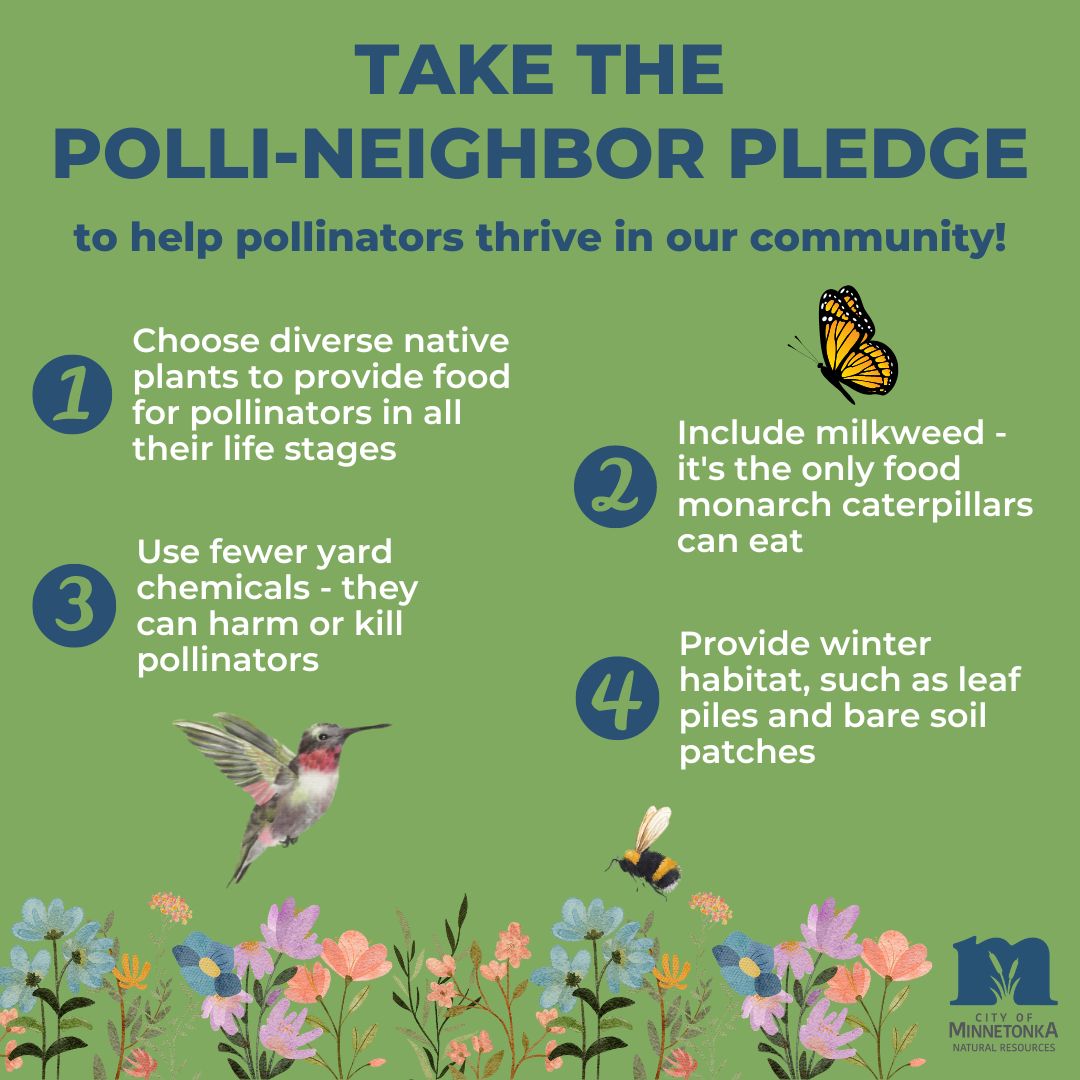
- Take the Polli-Neighbor Pledge to help pollinators thrive in our community!
- Watch our videos to learn more about pollinators and their habitat.
- Check out our Resilient Minnetonka program to learn how you can add pollinator habitat on your property
- Participate in community science programs, such as:
More about pollinators
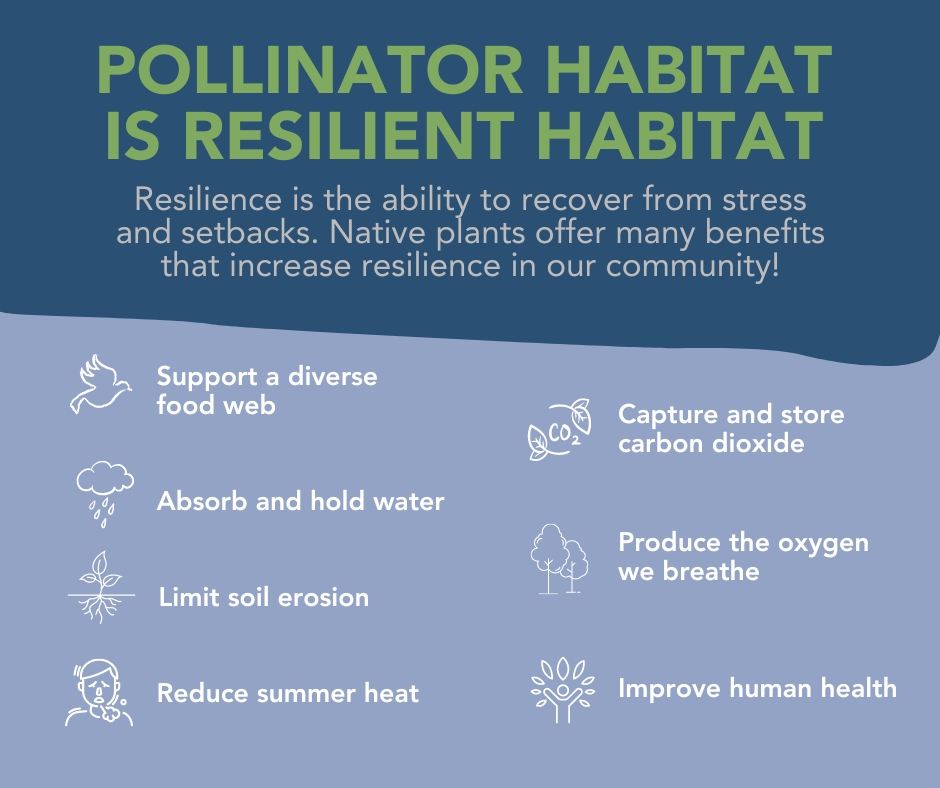
These days, lots of people are excited about landscaping that adds pollinator habitat. But did you know those same plantings also make our community more resilient?
Resilient landscapes can prepare for, recover from and thrive after extreme weather and other challenges – including those related to Minnesota’s changing climate. The benefits are amazing, including:
- Habitat that attracts and supports a wonderful variety of native pollinators, songbirds and other wildlife
- Lush plant cover that reduces noise and adds visual privacy while absorbing air pollutants and releasing oxygen for better air quality
- Healthier soil that absorbs and holds stormwater
- Less erosion (which improves water quality)
- Greater resilience to climate impacts, such as extreme heat, drought or flooding
- Less time and money spent on mowing, water, and fertilizers or pesticides – and fewer environmental impacts associated with those maintenance activities.
Proclamation of July as Monarch and Pollinator Awareness Month in Minnetonka
WHEREAS, more than eighty-five percent of flowering plants on Earth, including wild and cultivated species, require the assistance of animal pollinators in order to produce seeds; and
WHEREAS, globally, pollinators are in decline due to pressures including habitat loss, climate change and increased use of chemicals; and
WHEREAS, the monarch butterfly is an iconic North American pollinator whose eastern population has been reduced by at least 90 percent since 1996 and is being considered for federal protection as a Threatened species; and
WHEREAS, the United States Department of Agriculture and the U.S. Fish and Wildlife Service have declared the monarch to be a priority species for conservation because healthy monarch habitat benefits a wide variety of other species; and
WHEREAS, individuals and communities can help to save the monarch butterfly and other pollinators by planting native host and nectar plants and taking other steps to provide healthy habitat in yards, rights-of-way and open spaces.
NOW THEREFORE BE IT RESOLVED that the Minnetonka City Council hereby proclaims the month of July as “Monarch and Pollinator Awareness Month” in the city of Minnetonka.
Your yard is habitat!
Your home landscape can support an amazing number and variety of pollinators, so design with them in mind. Good pollinator habitat includes these components:
Host plants: Milkweed, native trees and shrubs, and many wildflowers and native grasses provide food for pollinators in their early life stages. Most moth and butterfly larvae are specialists, feeding on just one or a few kinds of host plants. In the U.S., five plant groups are especially important: oak, willow, cherry, pine and poplar. These keystone species support many caterpillars that, in turn, are an important food source for nesting songbirds and other wildlife. You’ll find a handout about keystone plants in the Documents section of this site.
Nectar sources: By planting diverse native species, you can provide for generalists and specialists alike. Try to include native plants with different flower shapes, sizes, colors and scents. And ideally, choose a collection of plants that will bloom through the whole growing season (April through October).
Water: Pollinators get thirsty and hot, so water is a good way to attract them to your yard. Be sure to clean these containers regularly, and replace the water every few days to prevent mosquito breeding.
Overwintering and nest sites: Rock and brush piles, loose leaves, bare soil and dried native plant stems can provide good shelter for pollinators. Soft landings are plantings or features situated under keystone trees, which offer critical shelter and habitat to pollinators in different life stages and seasons. Visit the Documents section of this site to find a handout about soft landings.
Fewer chemicals: Chemicals are a common solution to pest and weed problems. But pesticides can inadvertently kill or harm beneficial species. Ecological pest control is a good alternative. This strategy focuses on maintaining healthy, diverse landscapes that are less vulnerable to pests. To apply this technique:
- Tolerate moderate plant damage by beneficial insects in return for their invaluable services to our ecosystem.
- Create habitat for essential insect predators such as songbirds, toads, snakes, bats, dragonflies and wasps.
- Identify the top pests in your yard and learn about their life cycles. That ensures you control pests during their most vulnerable stage.
- Try hand-picking or use nonchemical products, like horticultural oils or growth regulators, to manage specific pests on particular plants.
- Apply chemical pesticides only when other strategies have failed. Follow application instructions carefully, target problem areas rather than broadcasting chemicals widely, and never apply on windy days or when rain is forecast (because wind and rain can spread the chemicals to unintended locations).

- There are no stories to display. Why don't you share one?
-
Natural Resources Engagement Coordinator

Phone 952-988-8442 Email cpetersen@minnetonkamn.gov


